Showing posts with label Bas relief sculpture. Show all posts

Wednesday, August 9, 2017

Sculpting Wind


Dear Art Lover,
Kitchen as art studio bas-relief sculpture compressed form
Kitchen as Art Studio
     The last time I showed you a progress image on my new bas-relief sculpture project, “Wind and Wisteria,” was in my post on 18 June, when I was still in a cast for a broken right wrist.  I started the piece with my left hand.  The cast was removed on 30 June, and I have done a bit of work since then. 

     I asked my landlord and my neighbor to lift the big board into my kitchen just before we got a few days of decent [certainly better than nothing!] showers.  This is how far I had gotten with my non-dominant hand.  I wanted the piece more vertical so that I could start developing it.

     Bas-relief is not “puffy painting” as I once thought before meeting Eugene Daub and Vasily Fedorouk.  It is compressed form.  That is a HUGE difference.  What I mean by “puffy painting” is possibly similar to quilt making…where one defines the boundary of a shape and then puts stuffing inside of it.  It is a look, but it is not bas-relief sculpture.

Lighting is important when creating bas-relief sculpture compressed form
Side lighting from kitchen door

Lighting is important when creating bas-relief sculpture compressed form
Harsh top lighting, but you see the difference from above?
 
Male model young boy in bas-relief sculpture Borsheim Art
     So, I prefer to create a bas-relief sculpture with an overhead light that helps me to see where the material is in relation to other parts.  However, this green plastilina [an oil-based clay] does not seem to have enough oil in it to stick well to the wood board, and I woke one morning to see that the boy’s face and broken away from the composition and slid down.  Luckily it was not damaged much.  I have since developed the form more anyway.  [You may see in the close-up shape here that I still have work to do.  For example, the lips have to be refined.  There is too much harsh light outlining the lips.  I need to fill-in some placed with clay, soften shapes, and think of the form of the mouth barrel.  I hope to make the mouth more kind and youthful.]

     Clay absorbs much more light than metal does.  If something looks contrasty in the clay, it will be so much worse in reflective metal!

     Lately, I have been creating the individual petals of the wisteria.  It is past time for the real blooms on my gate, although I have a few random flowers that are confused by the watering and drought.  Trying to understand them as models, but I am also using images as references.  Mamma mia, what a lot of work!  I find myself intimidated wondering if I can create the airiness of wind blowing in dangling petals in a thin sculpture.  When I feel this way, I often force myself to work and accept that it will go slowly as I figure out how to do what I think I want.  And another part of the day, I start a new project, because starting is always fun, as one sees change and development move along quickly.  I have learned that this is the only way I can get through the hump of the tough times.

Starting to model wisteria in bas-relief sculpture Borsheim Art

Artist working in kitchen during hot summer on bas-relief sculpture in clay

Wind personified as woman in bas relief sculpture
      For the head of the wind, I am also struggling.  I am not sure that I am capturing the idea that she is blowing, ie that SHE is creating the wind, or she is the wind personified.  And I chose to make a composition that will be empty inside the shape, allowing the wall to show through once hung.  This means that I have fewer things around her to show the effects of wind.  Maybe not the smartest idea, compositionally speaking?  Piano, piano as they say too often in Italy, “slowly, slowly.”


Peace,


Kelly Borsheim, artist

P.S. Look at my cool phone case that I ordered for myself as a gift for moving into the modern age of smart phones.  You may find your own desired cover design, or other products here:
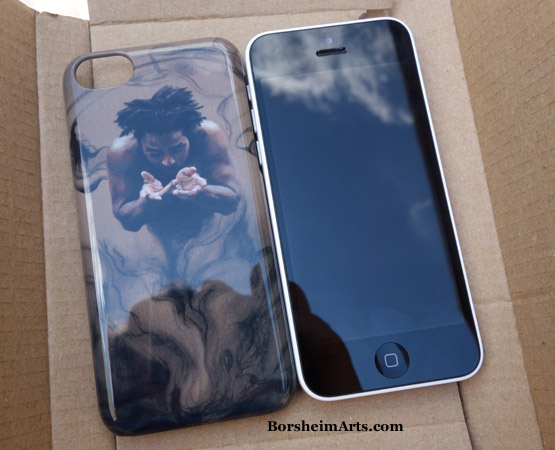
Il Dono - Borsheim Art on iPhone 5c case -choose yours


Tuesday, August 20, 2013

Graffiti Borgo degli Albizi Florence Italy


Cari Amici (Dear Friends),


As a continuation of my last blog post on the original form of graffiti, I share with you these images of a gorgeous work in degradation.  It is on Borgo degli Albizi, one of my favorite eye candy streets in Florence, Italy.  I think these designs are beautiful. 
[Click on an image to see it in a larger form.]


Even though the light pigments have eroded away, the ideas are still somewhat visible, “scratched” into the concrete.  True graffiti. 


This fourth image is a bit funny… to repair graffiti, it makes sense that one would have to refill the original incisions or decaying part.  But this grey ball is one blob that is not only a bit thick (protruding from the wall more than the rest of the design), but it seems odd that the new design was not created immediately while the cement was still wet!  Who knows how long this has been this way?


What a fantastical creature s/he is!


And finally, old and new graffiti together.  


Past posts about Italian graffiti:
My previous post with the meaning of “graffiti” :  http://artbyborsheim.blogspot.it/2013/08/graffiti-florence-italy.html
The sign of the Medici family (6 balls on the shield):  http://artbyborsheim.blogspot.it/2012/10/graffiti-florence-italy.html
Few things last forever, disappearing graffiti:  http://artbyborsheim.blogspot.it/2012/10/more-graffiti-florence-italy.html


****
Interested in street art?  I created a different kind of it in Florence over the course of four years.  I have written a book about the art, the artist, the politics, and the ambiance of working from 10 am to midnight in the streets on Italy.  The book is titled, “My Life as a Street Painter in Florence, Italy” and you may get your copy at a country near you… click on the appropriate Amazon link on the right hand column, under the moon at:

And thank you for joining me on this artistic journey.
Kelly Borsheim, sculptor / painter / muralist


Sunday, August 18, 2013

Graffiti Florence Italy


Cari Amici (Dear Friends),


I have written before about graffiti here in Italy before.  I just find it fascinating and beautiful.  I am speaking of the original meaning of graffiti, not so much the graffiti of today.

graf·fi·ti  [gruh-fee-tee] :

Origin:
1850–55;  < Italian,  plural of graffito  incised inscription or design, derivative with -ito -ite2  of graffiare  to scratch, perhaps influenced by presumed Latin *graphÄ«re  to write; both probably derivative of Latin graphium  stylus < Greek grapheîon;  cf. graphic, grapho-, graft1 


Coming home recently in Florence, Italy, I turned down a short road on the Oltrarno side of the Arno River, not far from the Trinita bridge.   It was after dark and my lack of ability with Photoshop meant that I was not able to successfully lighten these images… but here goes.


You may see here that the cement was troweled onto the wall and then the designs were scratched into the still-wet mixture.  Just as in sculpting in 3-dimensions, note that the artistan keeps the line at 90 degrees and crisp when he wants a dark line [note the raised edges on the straight lines near the top of the image], while he opens up the incision a bit if he was a lighter effect [grey vs. black, curved lines in the bottom part of the image].  In something flatter than a proper bas relief sculpture, these subtleties are about the only control the artisan has to play with tone, other than using actual color later.


This third image shows how this material ages… the wall becomes highly textured (and in my view, gorgeous) in the process of erosion.  

This next series illustrates a couple of things.  I have noticed here in Italy (and maybe in other countries) that great art is one thing and decoration quite another.  However, it is amazing what a simple design (technically speaking) can do for a space.  Many times I have seen palaces and homes decorated to the point of feeling almost too much on the wall patterns.  But when you look at the design, it is simple and repeated… not difficult per se, but it certainly gives a wondrous effect!


These last three images confuse and amuse me a bit.  I cannot tell if the faces in the patterns are by the original artisan or if a different person came along and added something closer to what we call “graffiti” today… the faces.  I am amused because you will note that the simple shape drawn for each head and the very simple faces drawn still result in what seems to me to be unique personalities.
A man…


A woman…


A work of art by Edvard Munch (author of “The Scream”).  What do you see?


I hope that you enjoy my little examinations of traditional Italian graffiti:   More in the next post.

Past posts about Italian graffiti:
The sign of the Medici family (6 balls on the shield):  http://artbyborsheim.blogspot.it/2012/10/graffiti-florence-italy.html
Few things last forever, disappearing graffiti:  http://artbyborsheim.blogspot.it/2012/10/more-graffiti-florence-italy.html